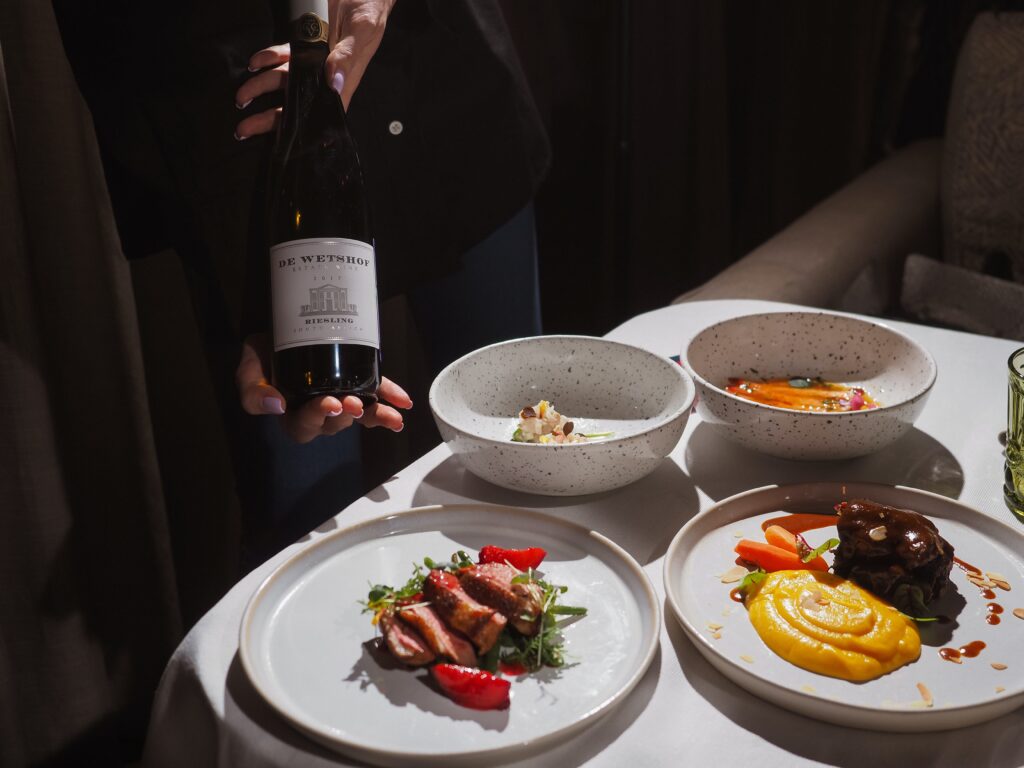
Food and wine pairing is the art of combining wine and food in a way that enhances the flavor of both. A perfect food and wine pairing can elevate a meal and create a harmonious dining experience. In this article, we will explore the basics of food and wine pairing, the key factors to consider, and some general guidelines to follow.
Key Factors to Consider in Food and Wine Pairing
Acidity: The level of acidity in both the food and wine is an important factor to consider when pairing. If the dish is acidic, then it’s best to pair it with a wine that has high acidity as well. This is because the acidity in the wine can balance out the acidity in the dish and vice versa.
Flavor Intensity: The flavor intensity of the dish and the wine is another important factor. A light wine should be paired with a light dish, while a bold wine should be paired with a similarly bold dish. Otherwise, one of the two may overpower the other.
Tannins: Tannins are a compound found in red wines that give them their characteristic dry and bitter taste. Tannins can also be found in certain foods such as dark chocolate. When pairing food and wine, it’s important to match the level of tannins in the wine with the level of tannins in the dish. For example, a tannic wine would pair well with a dish that has a high-fat content such as red meat.
Sweetness: The level of sweetness in the dish and the wine is also important to consider. A sweet dish should be paired with a wine that is equally sweet or slightly less sweet. Otherwise, the wine may taste sour or bitter.
Regional Pairings: Another consideration to keep in mind is to pair wines with dishes that originate from the same region. For example, Italian wine may pair well with Italian cuisine, French wine with French cuisine, and so on.
General Guidelines for Food and Wine Pairing
White wine typically pairs well with light dishes such as seafood, poultry, and salads. Some popular white wines to pair with these dishes include Sauvignon Blanc, Pinot Grigio, and Chardonnay.
Red wine usually pairs well with heartier dishes such as red meat, game, and stews. Some popular red wines to pair with these dishes include Cabernet Sauvignon, Merlot, and Shiraz.
Sparkling wine is great to pair with appetizers, oysters, and light seafood dishes. Some popular sparkling wines include Champagne, Prosecco, and Cava.
Rosé wine pairs well with lighter dishes such as sushi, grilled vegetables, and fruit salads.
Dessert wines should be paired with desserts that have a similar sweetness level. Some popular dessert wines include Port, Sherry, and Muscat.
Conclusion
Food and wine pairing is an art that takes practice to master. However, by considering the acidity, flavor intensity, tannins, sweetness, and regional pairings, and following some general guidelines, you can create a harmonious dining experience that will delight your taste buds. Remember, the ultimate goal of food and wine pairing is to enhance the flavor of both, so trust your palate and experiment with different combinations to find your perfect pairing.